Dental implants
An implant is a titanium post placed in the jawbone, with a crown fixed on top. It can replace a missing tooth without touching the teeth beside it. It takes months, not days, and it is not right for every mouth.
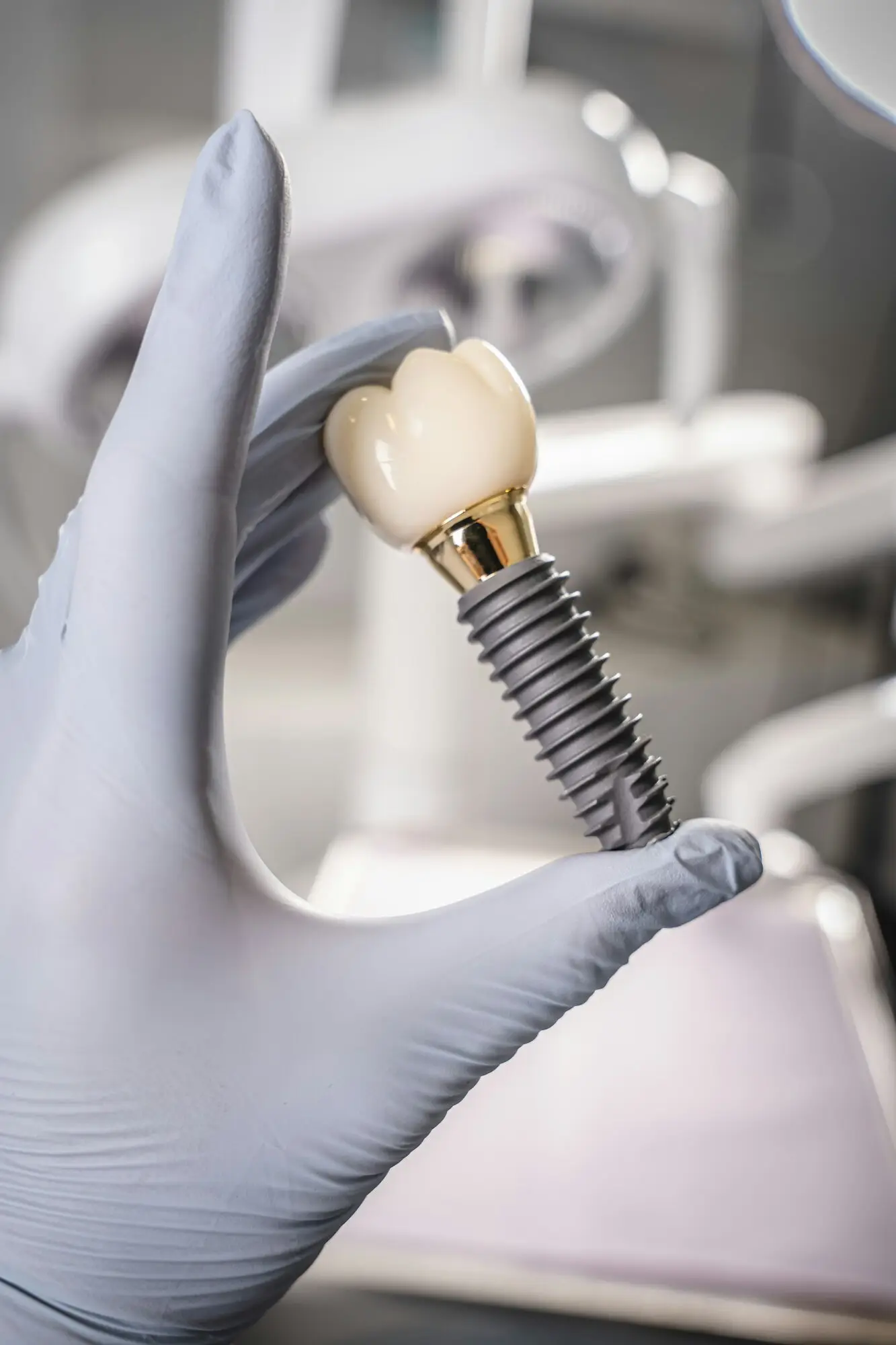
At a glance
- Total time
- Usually 3 to 6 months
- Anaesthetic
- Local anaesthetic. Sedation can be arranged
- Who treats you
- Dr Elena Carrió
Who it is for
- Adults with one or more missing teeth and enough healthy bone and gum to hold an implant.
- People whose gum disease and diabetes, if they have them, are under control. Smoking lowers the chance of success, and we will say so.
What happens
- An assessment with a 3D X-ray, so we can measure the bone before deciding anything.
- A written plan with each stage, its timing and its price.
- Placing the implant: a minor operation under local anaesthetic, about an hour for one implant.
- Healing for two to four months, while the bone grows around the implant. You can have a temporary tooth.
- A scan for the crown, then the crown is fitted. One or two short visits.
Afterwards
- Expect swelling and some bruising for three to five days after placement. We give you written aftercare in your language.
- Eat soft food on the other side for the first week.
- Implants need the same brushing as teeth and a check-up every year.
What can go wrong
- Sometimes an implant does not fuse with the bone and has to be removed. It can often be placed again after healing.
- Infection around an implant can develop years later, especially with poor cleaning or smoking.
- Nerves and sinuses near the jaw can rarely be affected. The 3D X-ray is there to plan around them.
Other options
A bridge fixed to the neighbouring teeth, a removable denture, or leaving the gap. Each has a different cost and lifespan, and we compare them with you in writing.